How a tiny historic fishing village became the city of Brighton
Take a walk along Queens Road or the Lanes today, and take in the spread of shops, restaurants, and pubs, and it’s hard to imagine this was all once an obscure, storm-battered fishing village clinging to the Sussex coast.
Now known as a British icon, Brighton has come from surprisingly humble beginnings, with some turbulent episodes that can make you wonder how exactly it survived for long enough to flourish into the city we know today.
Here’s an abridged history of Brighton and the story of how an unremarkable dot on the map developed into one of the UK’s most unique and beloved cities.
The origins of Brighton's name
In the earliest records of the place where Brighton now stands, the stretch of coast was known as Brighthelmstone. The Anglo-Saxon name is recorded in the Domesday Book and roughly translates to “Beorhthelm’s farmstead”.
For centuries, it had been a modest fishing and agricultural settlement. There was nothing fashionable or exciting about it at this time, just hard-working people pulling mackerel out of the sea, and hoping the turmoil of the recent Norman conquest wouldn’t come too close to their doorstep.
By 1580, Brighthelmstone had grown into Sussex’s main fishing port, with around 400 recorded fishermen working out of the settlement, along with 102 landowners who paid parish rates (kind of like a medieval council tax).
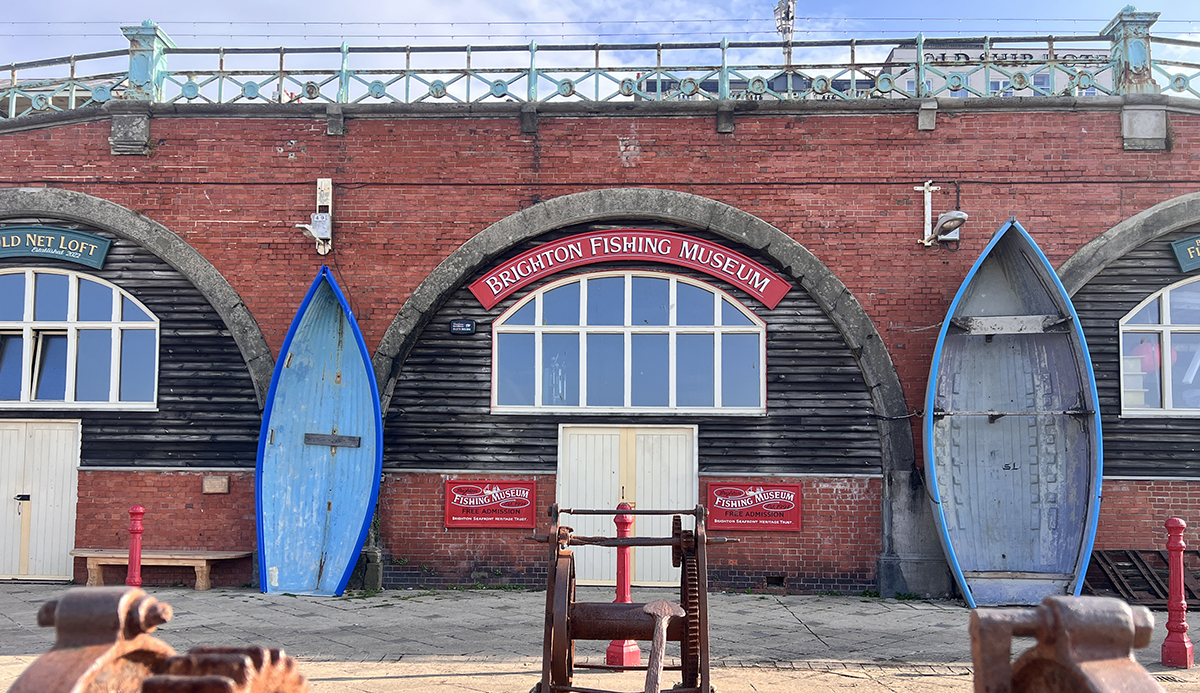
As you’ll learn with any visit to the Brighton Fishing Museum, the whole community revolved around the fishing trade. The men who worked the sea there lived in tight lanes, built close together both for shelter and quick access to the shore. Today, this area is known less for being the home of fishermen, and more as a good spot to browse vintage records or enjoy a flat white. That’s right – The Lanes, Brighton’s beloved shopping quarter, follows roughly the same structure as a medieval fishing village.
The doctor who changed everything
From there, the history of Brighton passed quietly for hundreds of years, barring a coastal raid by French soldiers during the Anglo-French War of 1512–1514. In the 1720s, writer Daniel Defoe dismissed it as “a poor fishing town, old built and at the very edge of the sea.” Not exactly a glowing endorsement.
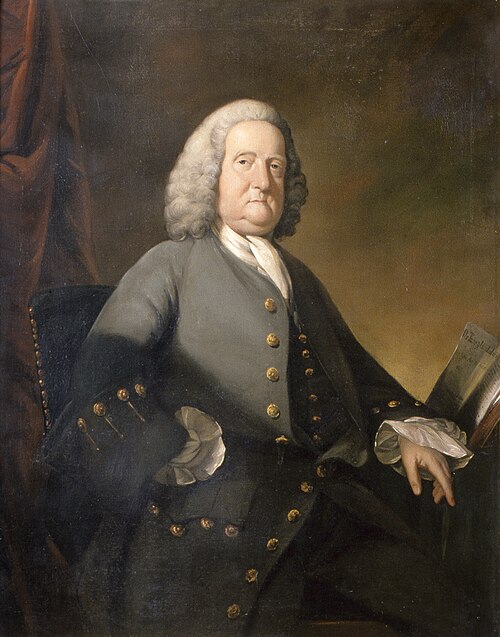
The arrival of Dr Richard Russell is where the city’s story takes a surprising and unexpected turn which changed its trajectory forever.
Russell was a physician originally from Lewes who began taking frequent trips to Brighton around 1747, bringing with him a rather bold idea, even for the state of medicine at the time: drinking and bathing in seawater could cure almost anything. Scrofula, leprosy, scurvy, glandular disorders, you name it – to Dr Russell, the sea off Brighton beach was the medicine you needed.
In 1750, Russell published a Latin dissertation, titled De Tabe Glandulari (On Glandular Fever), which was translated into English in 1752. This recommended that people suffering from the condition drink half a pint of seawater every morning at 5am, then take a dip in the sea. This may not sound like the safest or sanest morning routine to us. Still, just like the self-help advice from the questionable podcast bros of today, Russell’s health advice became an overnight sensation.
Dr Russell used the proceeds from his bestseller to build himself a large house in the Steine, on the site of the current Royal Albion Hotel, with the Brighton sea right on his doorstep. Soon wealthy patients began flooding in from across England, their wealth and status rubbing off on the town, and quickly growing the city’s economy and reputation.
Today, the Royal Albion Hotel bears a plaque dedicated to Russell, which reads: “If you seek his monument, look around.” Considering his influence on the city surrounding it, this is by no means an understatement!
Sign up to the Brighton newsletter
The Prince and the Palace
After Russell’s fifteen minutes of fame, another man would come along to bring Brighton even further into the public eye.
George, Prince of Wales (later King George IV) visited Brighton for the first time in 1783 at the age of 21, and quickly fell in love with the place. He would come back frequently through the rest of his life, bringing with him his entourage and the full spectacle of Regency high society.
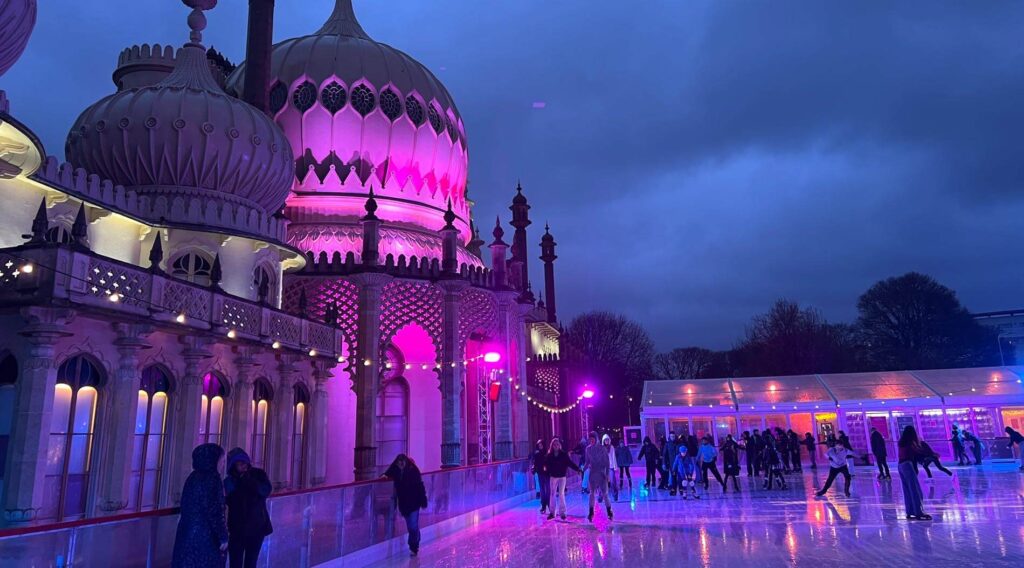
George had a stint of living in a modest farmhouse facing the Old Steine, which was gradually expanded into the land surrounding it, most famously by the architect John Nash, who designed the breathtaking Indo-Saracenic palace we now know as the Brighton Pavilion. With a unique blending of different architectural styles, the building looks like it was made by someone who’d read a lot about Indian palaces, but had never actually seen one. In a sense, that’s exactly what it is, and it’s absolutely worth a visit!
With its royal patronage, Brighton transformed from an up-and-coming health resort to a popular destination for the rich and famous. This period of rapid development saw some of the city’s most famous hotels, assembly rooms, and terraces spring up, many of which still stand today, full of the same Regency-era grandeur.
The railway arrives

The Regency era opened Brighton to the wealthy, while the development of the railways during the Victorian era threw open its gates to everyone else.
The Brighton Main Line was opened on the 21st September 1841, creating a direct connection between London and the Brighton coast. A public holiday was declared in the city. Church bells rang, the streets were adorned with bunting, and within a decade, Brighton was known as one of the fastest-growing settlements in the country.
The numbers alone show just how rapidly Brighton grew in this period. The city’s population was only around 7,300 in 1801. By 1901, it was more than 120,000. Between 1841 and 1871, the 30 years after the railway line opened, the population more than doubled, swelling rapidly from 46,661 to 90,011.
As day-trippers poured in from London, the Victorian era saw the construction of the Grand Hotel (1864), the West Pier (1866), and the Palace Pier (1899), all Brighton landmarks that still define it today.
What history left behind
Brighton has been through some major changes since it was recorded in the Domesday book, but all that history behind us didn’t simply disappear. It’s still here, woven deep into the city’s fabric, ready to be enjoyed by all.
The Lanes
Brighton’s iconic shopping district, with narrow, winding streets packed with independent jewellers, boutiques, and cafes, follow the layout of the original fishing village of Brighthelmstone. Every time you pass through, you’re walking in the footsteps of 16th-century fishermen and net-menders.
The Brighton Fishing Museum
Aptly positioned right on Brighton beach, this small but fascinating museum is one of the city’s unsung gems, and ranks among the best things to do in Brighton for any history buff. Free to enter, the fishing museum in Brighton tells the 1,000-year story of Brighton’s seafront community through images, video, and artefacts, including a 27-footer punt boat as its centrepiece.
Brighton Museum & Art Galleries
The Royal Pavilion grounds is another must-see for anyone curious to learn about how the city came to be. This intriguing museum contextualises local history beautifully through its broad selection of exhibits, covering everything from the Regency era to Brighton’s 20th-century counterculture.
A fishing village to a British icon
From surprisingly humble beginnings, the city we now know as Brighton has been shaped by a doctor with dubious medical theories, a prince with extravagant taste, and a revolutionary railway that turned a fashionable playground for the rich into a city for everyone.
Each one of these episodes left something behind you can still see today; from the pier to the Lanes, from the Pavilion to the grand seafront terraces. Underneath it all of Brighton’s places to visit lies the fossil of Brighthelmstone, a small, sea-battered fishing village that somehow started it all.
Whether you’re visiting for the first time or you’re a local who wants to know more about what’s right on your doorstep, Brighton rewards curiosity, and there’s always a new, fascinating layer to its story for you to discover.
For more guides on local history, Brighton landmarks, and things to do in Brighton with kids, be sure to follow us on social media, or subscribe to our email newsletter today.
More Brighton stories & attractions
If Brighton’s history has got you curious, there’s lots more lurking behind some of Brighton’s most iconic landmarks. Take a look at the weird and wonderful secrets hidden beneath the Royal Pavilion or find out what life was really like inside Preston Manor. Planning something a little less historical? Our complete guide to planning a Brighton hen do covers the practical stuff if you’ve got a big weekend in the diary.
Still have questions?
Check out answers to some of the more popular questions about the once historic fishing village.
When was Brighton founded?
While there’s been a settlement where Brighton now stands since at least 1086, when it was recorded in the Domesday book as Brighthelmstone, Brighton was officially founded in 1313, when King Edward II granted Brighthelmstone a market charter.
What was Brighton originally called?
Brighton was originally called Bristelmestune in the Domesday book, which roughly translates as “Beorhthelm’s farmstead”. Over time, the name evolved through forms such as Brighthelmstone and Brighthelmston, before being shortened to just “Brighton” at some point in the 19th century.
What does Brighthelmstone mean?
Though the name “Brighthelmstone” is too old to be translated precisely, it’s believed to mean “Beorthelm’s homestead” or “Beorthelm’s settlement,” from the Old English personal name Beorthelm, and tūn meaning farmstead, homestead, or village.
How old is Brighton Seafront?
Brighton seafront has been populated since the town’s origins as a small Saxon fishing settlement, over 1,000 years ago. However, the modern promenade and resort-style seafront was mostly developed in the 18th and 19th centuries.