Think you need a car to get around Brighton and Hove? Think again! Much of the city is compact enough to explore on foot, and buses, trains, taxis, and Beryl bikes (thank you, cycle lanes!) make it super easy for when you need to travel further.
Brighton & Hove Buses connect our most popular neighbourhoods across the city and beyond, local trains make journeys between Brighton, Hove and surrounding areas quick, and taxis are easy to find when you need a door-to-door option.
This guide brings together the essentials on transport in Brighton & Hove, including Brighton bus times and routes, train stations, taxis, bike hire and public transport links, so you can work out the easiest way to get where you’re going.
Brighton and Hove is lucky enough to have a brilliant network of buses. There are numerous routes covering the city, as well as services to towns like Lewes, Seaford, Eastbourne, and Tunbridge Wells. When using the buses, you have a few different payment options.
Use a contactless card or digital wallet to tap when you get on the bus and when you get off. You’ll be automatically charged for the journey.
Download the Brighton & Hove Buses App to pay for your tickets on your phone or smartwatch.
Brighton buses still accept cash payments for tickets, keeping our public transport widely accessible.
Find fare information on the Brighton & Hove Buses site, where you can also plan your journey and check Brighton bus times.
Heading out for the evening? Brighton’s not short on night buses, with services including the N1, N5, N7, N12, N14, N25, N29 and N48 which run around the city and further afield.
Some routes, including the N1 to Woodingdean via Royal Sussex County Hospital and the N29 to Lewes, run 24 hours a day, 7 days a week, so that you never have to wait long for a Brighton bus to come your way.
If you’re in the mood for coastal sightseeing, we recommend hopping on a Coaster 12, 12X or 13X bus. These services travel to and from:
Different services offer different frequencies. The Coaster 14 to Newhaven and Coaster 12 to Eastbourne, for instance, offer far more bus times than the Coaster 13X, so it’s worth checking the timetable before you head out.
All Brighton buses are designed to be accessible, too. They’re wheelchair-friendly, use both audio and visual stop announcements, and have low floors for easier boarding.
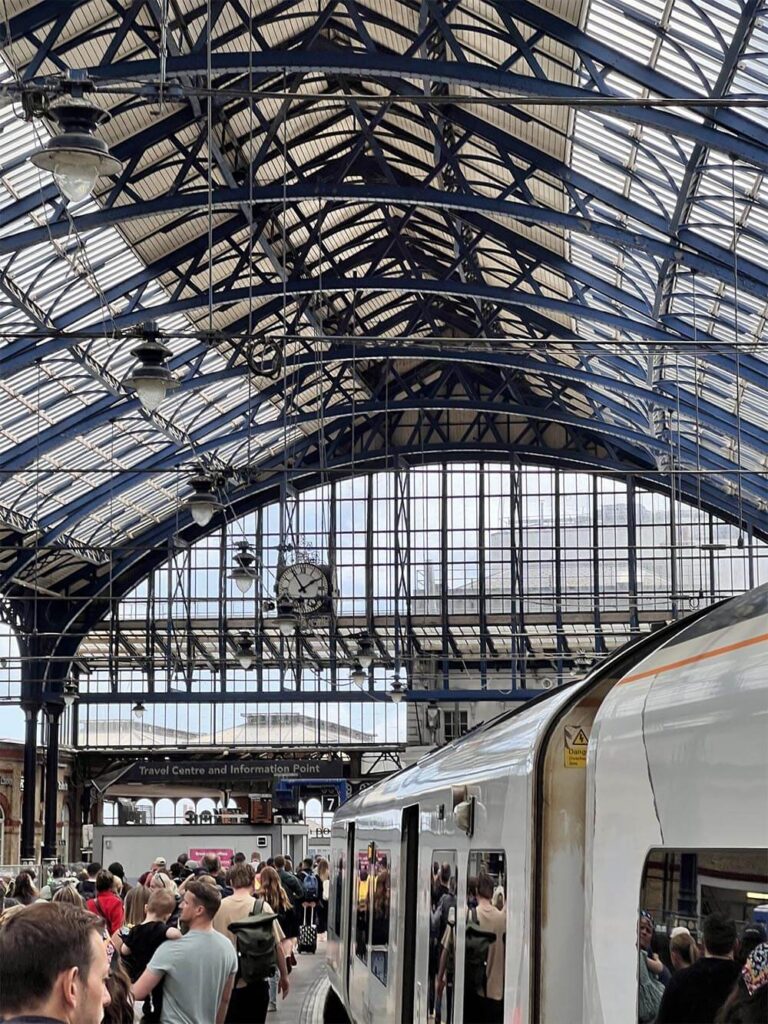
There are a whopping 8 stations in the Brighton and Hove area, providing excellent movement around the city and links to the rest of the country. The stations are:
Brighton train station, in particular, is very well connected, with direct services to London Blackfriars, Cambridge, Chichester, Southampton, and Portsmouth.
Driving to the train station? Check out our Parking Guide for Brighton & Hove to find a safe space for your car.
While Brighton’s public transport is excellent, sometimes it’s nice to skip the waiting and hop straight into a taxi.
If you’re looking for Brighton taxi numbers, Brighton & Hove Radio Cab is a long-established local provider. Call on 01273 20 40 60, or book via their app. You can also wave down one of their white and aqua hackney carriages when you’re out and about in Brighton.
There are also a number of other Brighton and Hove taxis and providers in surrounding areas. These include:
If you’ve had enough of buses, trains, and taxis, Brighton is a brilliant city to walk around.
Brighton train station is set right next to North Laine, which is buzzing with independent shops and cafes. Simply pop under the bridge that’s directly in front of the station’s entrance/exit, and you’ll be dropped into the hustle and bustle of this boho paradise.
If you’re craving the fresh sea air, walk from Brighton station directly down Trafalgar Street, and keep going for 10-15 minutes until you spot the sea. You can also veer off route to find The Lanes, which is a goldmine for luxury shopping, antique jewellery, and charming old pubs.
Fancy a seafront stroll? You can walk from central Brighton to Hove in half an hour (depending on your walking pace and whether or not you stop off for an ice cream, of course). Head in the other direction to reach Brighton Marina, which is a longer walk of around an hour, giving you plenty of time to soak in the coastal views.
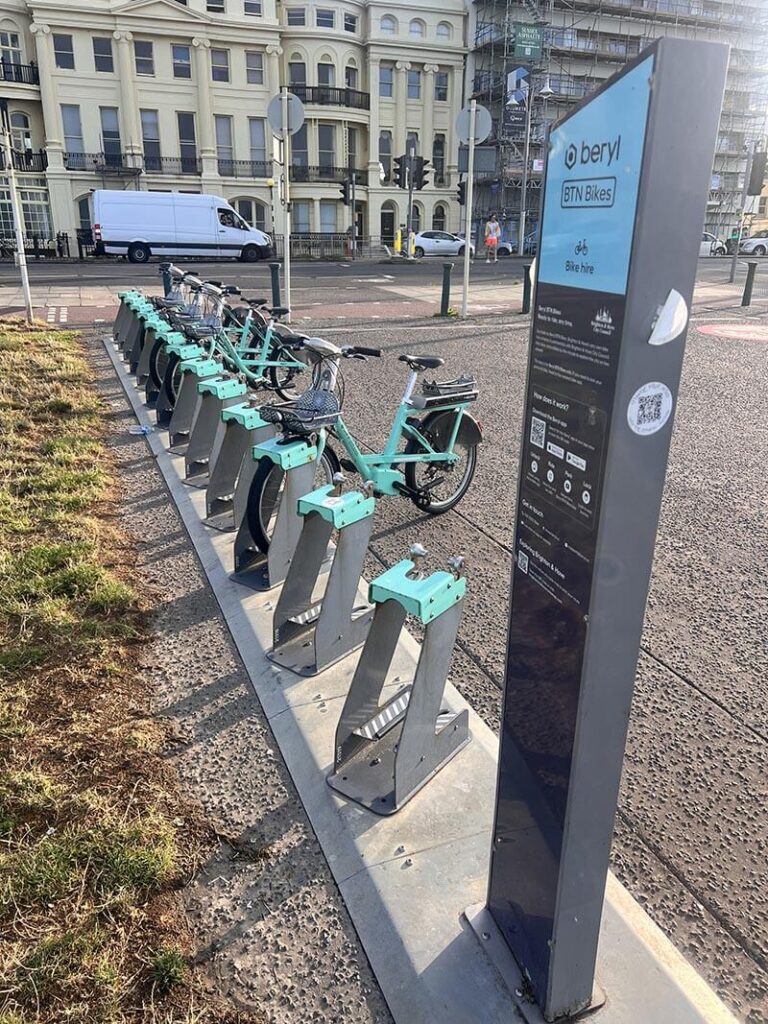
Brighton’s known for its green initiatives, so it’s no surprise the city is both bicycle and scooter friendly. There are dedicated cycle lanes on many of the main roads, as well as a seafront cycle lane so that you can enjoy the sea breeze while getting from A to B.
If you don’t have a bike with you, no problem! Check out Beryl Bikes in Brighton, home of the city’s rental bikes and e-scooters.
The electric scooter options are an easy-breezy choice, enabling you to go further and get to your destination quicker, all while keeping the sweat to a minimum. For a more laid-back journey, choose a bike and take your time.
There are 104 Beryl bays around Brighton and Hove, and you can find your closest on the Beryl Map. Make sure you’ve downloaded the Beryl App before you head off, and use it to find your nearest bike or scooter, sort out payment, and unlock your chosen method of transport. Simple!
Brighton’s got a lot of accessible transport options, helping everybody move around the city comfortably. We already mentioned that all Brighton buses are wheelchair-friendly, so what else can you expect? Let’s take a look:
Wheelchair-accessible taxis are available across Brighton, with some able to accommodate passengers who need to remain in their wheelchair during the journey. We recommend calling your chosen taxi company before booking to check availability of wheelchair-friendly vehicles, and booking in advance where possible.
You can hire mobility scooters from businesses like Shopmobility, which is centrally located in Churchill Square shopping centre and has a few other locations around Brighton.
Brighton & Hove’s Helping Hand card lets you discreetly communicate that you might need a little extra time or assistance when travelling. Apply for a Helping Hand card online.
You can hire mobility scooters from businesses like Shopmobility, which is centrally located in Churchill Square shopping centre and has a few other locations around Brighton.
Many of Brighton’s train stations are step-free, including both the central Brighton station and Hove train station.
From Brighton bikes to wheelchair-friendly buses, the city offers plenty of ways to move around for all abilities. Hop on an e-Scooter to zip into Hove, tap-to-pay on a bus to The Lanes, or take the cycle path to your favourite coffee shop in Kemptown.
Looking for more info on getting around Brighton and things to do while you’re here? Subscribe to our newsletter for everything you want to know, delivered straight to your inbox.
Next stop: Brighton and Hove!
Got a question about getting around Brighton & Hove? Find quick answers on & the easiest ways to travel across the city.
The best way to travel around Brighton depends on where you’re headed and your needs. For an eco-friendly way to take in the sights while you move around, try a Beryl bike or e-scooter. Hop on a bus for the ease of tap-in, tap-out payments, or take a train to explore some of the city’s lesser-known neighbourhoods, like Falmer and Portslade.
Brighton’s very walkable! The city’s super compact, with the centre being around 1 square mile in total. It takes just 25 minutes to walk from Brighton train station all the way to Brighton Pier, and The Lanes, North Laine, and Churchill Square Shopping Centre all sit within this area.
There are cashless options on most (if not all) Brighton transport options. You can tap to pay on buses, trains, in many taxis, and when using the Beryl Bikes, putting your contactless card or digital wallet to good use.
Yes! Brighton has a seasonal City Sightseeing open-top bus, with stops at some of the city’s biggest landmarks and attractions. You can hop on and off as often as you like while your ticket is valid, making it a handy option if you want to see a lot of Brighton without clocking up quite so many steps.
The service usually runs from spring into autumn, so check the latest timetable before planning your day.
Single journeys on Brighton & Hove Buses currently cost £3 or less, thanks to the national bus fare cap, which runs until 31 December 2026. Some shorter journeys cost less. If you’re travelling several times in the same day or throughout the week, using Tap On, Tap Off can work out better, as your fares are automatically capped based on the journeys you make.
Brighton & Hove residents who are eligible for an older person’s or disabled person’s bus pass can apply through Brighton & Hove City Council. You’ll need to meet the relevant eligibility requirements and provide supporting information as part of your application.
For regular paid-for bus passes and longer-term tickets, Brighton & Hove Buses also offers day, weekly and longer-duration options through its app and Key smartcard.