LGBTQ+ pride flags and what they all stand for
Spot a Pride flag you don’t recognise? It’s hard not to be curious. The rainbow Pride flag might be the best known, but it’s just one of many LGBTQ+ Pride flags celebrating different identities, communities and experiences.
Every Pride flag has its own origin story. Some represent sexual orientations, others celebrate gender identities, while many were created to help communities and subcultures within our community feel seen, represented and connected. Over the years, new Pride flags have joined the original rainbow design, reflecting how language, visibility and understanding of identity continue to evolve.
You might be looking for a Pride flag that represents you, trying to understand one that represents someone you care about, or simply curious about the meaning behind a Pride flag design you’ve spotted at Brighton Pride, in a shop window or on a pin of someone you walked past. Whatever sparked your curiosity to learn more about all the pride flags, you’re in the right place.
In this guide, we’ve brought together a complete Pride flags list where you’ll uncover the history behind every Pride flag, what each design represents and the meaning behind its colours. Along the way, you’ll discover some of the community’s most recognisable symbols, as well as lesser-known flags that deserve just as much visibility.
Each one tells a different story, but together they celebrate the diversity, resilience and pride of the LGBTQIA+ community.
Never miss an event, join our local newsletter
Umbrella pride flags
These are the Pride flags you’ll probably recognise first. They represent the LGBTQIA+ community as a whole, with each new version building on the last to reflect how our community. Each of these pride flags represents the wider LGBTQIA+ community while reflecting how our community has grown, evolved and become more inclusive over time.


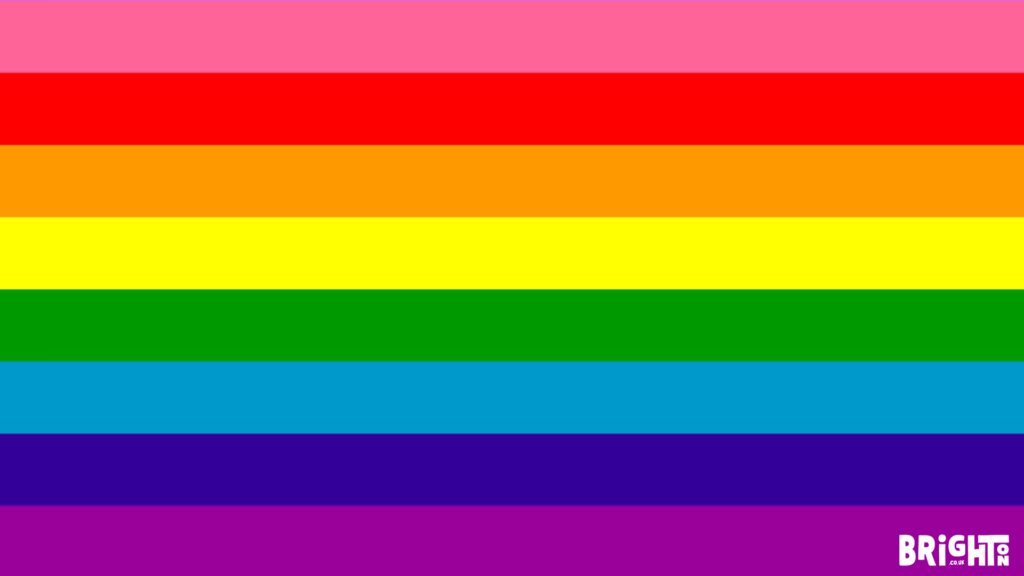
Gilbert Baker Pride Flag
(Original pride flag, 1978)

The original Pride flag with eight stripes, as designed by Gilbert Baker, was created in 1978 and flew publicly for the first time at the San Francisco Gay Freedom Day Parade celebration on June 25, 1978.
The request for the original pride flag came from Harvey Milk, the first openly gay elected official in the history of California, where Gilbert was asked to create a symbol of pride for the gay community. Every rainbow Pride flag you’ll see today can trace its roots back to this original design.
What do the colours of the Gilbert Baker Pride Flag represent?
Pink = sex
Red = life
Orange = healing
Yellow = sunlight
Green = nature
Turquoise = magic & art
Indigo = serenity
Violet = spirit of LGBTQ+ people
The origin story of the Gilbert Baker Pride Flag:
“ A Rainbow Flag would be our modern alternative to the pink triangle. Now the rioters who claimed their freedom at the Stonewall Bar in 1969 would have their own symbol of liberation. ”
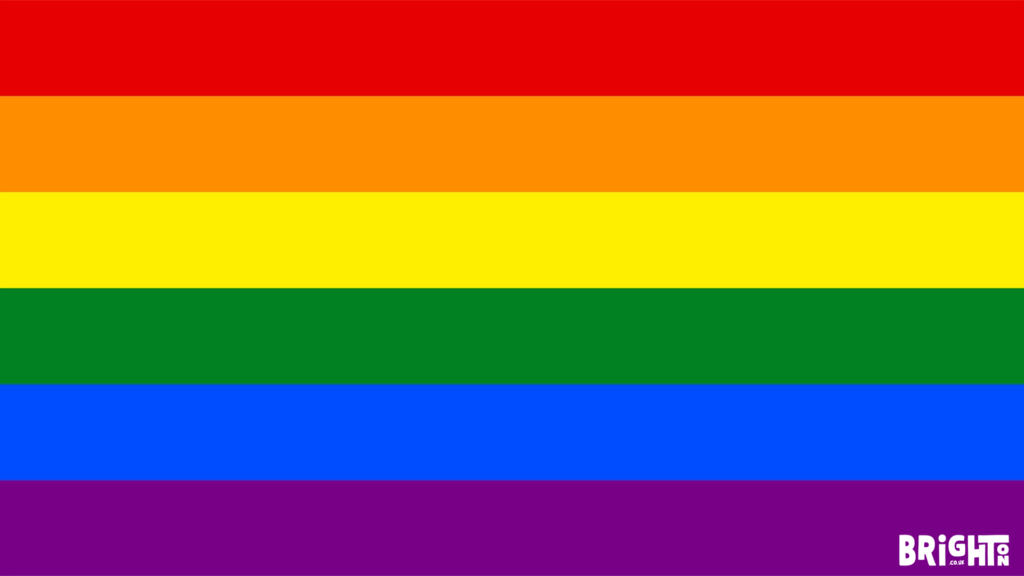
Traditional Pride Flag
(6-colour variations)

If someone says “Pride flag”, this is probably the one that springs to mind. The six-colour rainbow flag evolved from Gilbert Baker’s original design. Hot pink wasn’t included in these flags because the fabric was so difficult to find and was expensive. Turquoise was also dropped from the design to make the stripes divide evenly. Decades later, it’s still one of the most recognised symbols of LGBTQ+ pride, visibility and solidarity across the world.
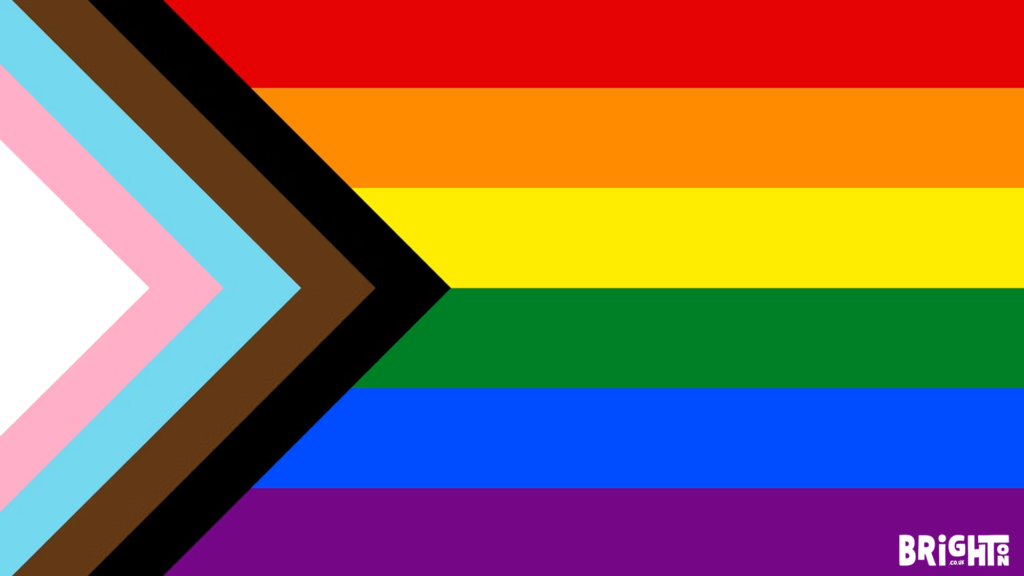
Progress Pride Flag

Designed by Daniel Quasar in 2018, the Progress Pride Flag builds on the traditional rainbow by adding chevrons representing transgender communities and LGBTQ+ people of colour. It’s become one of the most recognisable Pride flags today, and you’ll spot it everywhere from Pride parades to independent businesses proudly showing they’re an inclusive space.
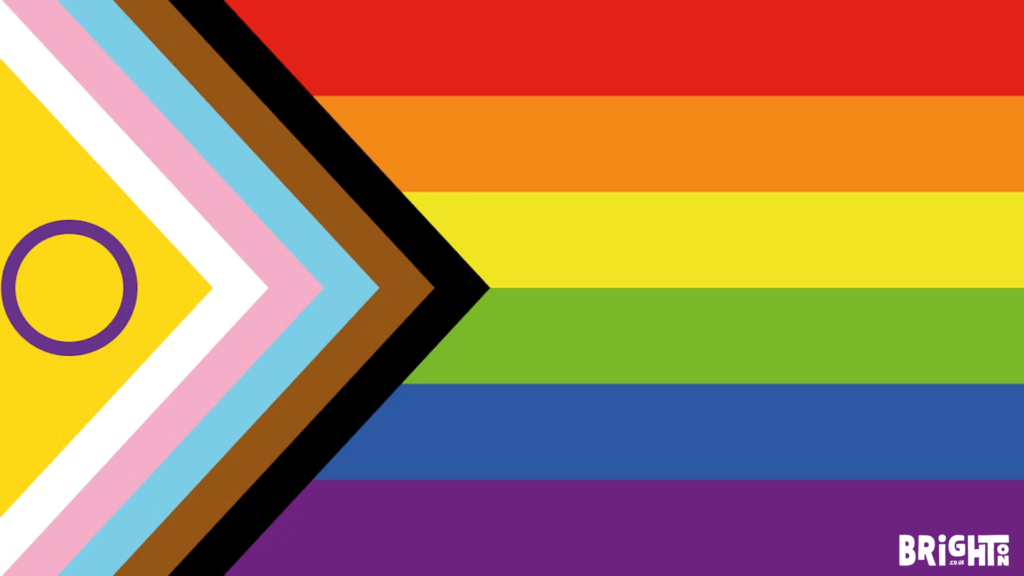
Intersex-inclusive Progress Pride Flag

In 2021, Valentino Vecchietti of Intersex Equality Rights UK updated the Progress Pride Flag to include the intersex flag. The yellow triangle and purple circle represent intersex people, making one of the community’s most recognisable symbols even more inclusive and representative.
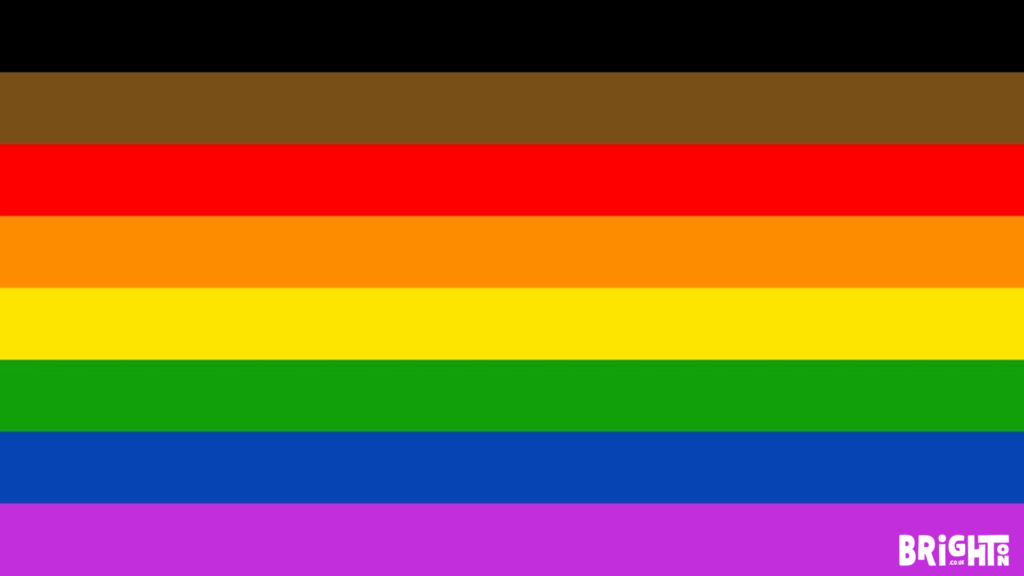
Philadelphia People of Colour Pride Flag

Created in 2017 as part of a Philadelphia’s ‘More Colour More Pride’ campaign, this flag adds black and brown stripes to the traditional rainbow. They represent LGBTQ+ people of colour and recognise that everyone’s experiences of identity, acceptance and equality aren’t the same. It was an important step towards making more people feel seen within the wider community.
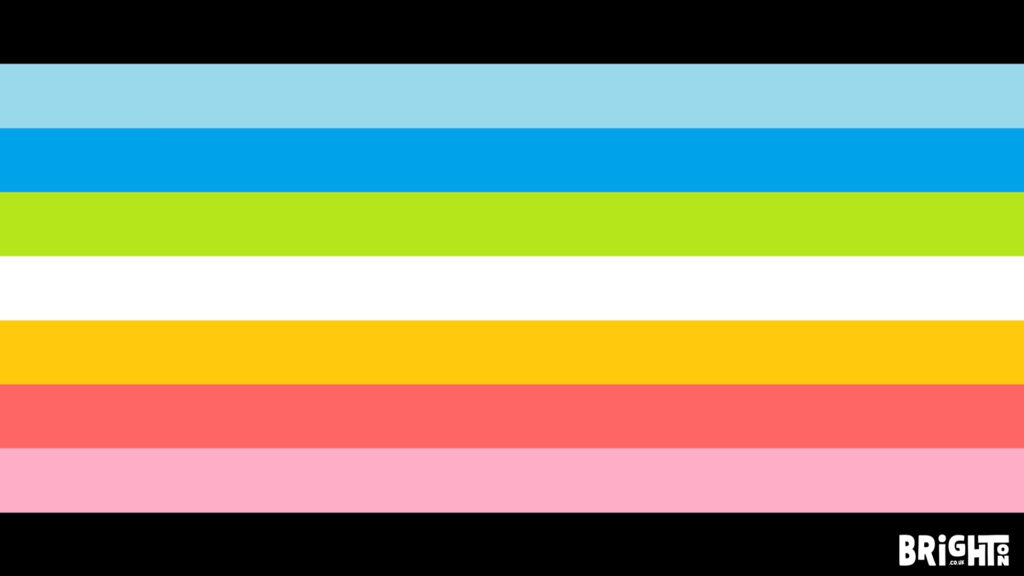
Queer Pride Flag

The Queer Pride Flag was introduced in 2015 to celebrate people who identify as queer. For many of us, reclaiming the word “queer” has transformed it from something once used to cause harm into a word that’s empowering, welcoming and proudly ours. The flag reflects the diversity and fluidity that sit at the heart of queer identity.
What do the colours of the Queer Pride Flag represent?
Pink and blue shades = same-gender attraction
Orange and green stripes = non-binary and gender non-conforming individuals
The black and white stripes = asexual, aromantic, and agender communities.
Gender identity pride flags
These Pride flags celebrate the many different ways people experience and express gender. Some represent identities outside the gender binary, while others reflect experiences that don’t fit traditional expectations of masculinity or femininity.


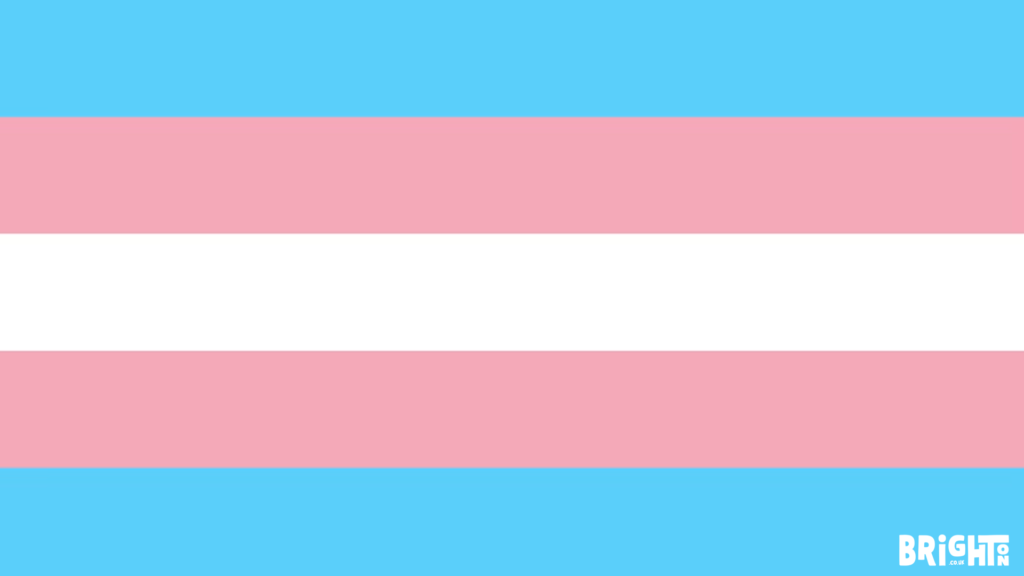
Transgender Pride Flag

Monica Helms, an openly transgender American woman, designed the Transgender Pride Flag in 1999. Its light blue, pink; representing traditional colours associated with baby boys and baby girls. The white stripe in the middle is for those who are transitioning, intersex or have a neutral or undefined gender. Helms explain the intent behind the Trans Pride flag as:
“ The pattern is such that no matter which way you fly it, it is always correct, signifying us finding correctness in our lives. ”
Non-binary Pride Flag

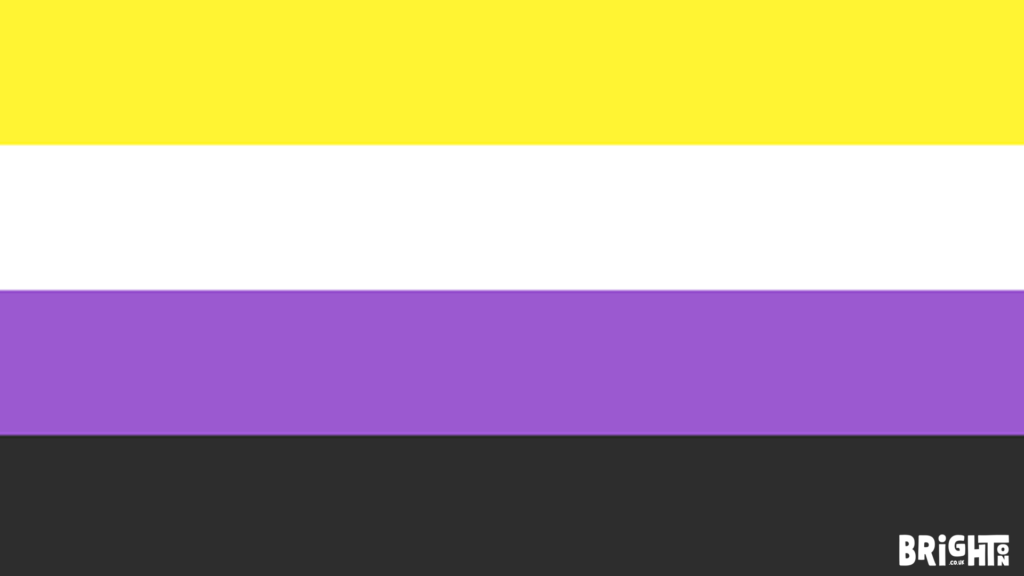
Kye Rowan created the Non-Binary Pride Flag in 2014 for non-binary people who felt the Genderqueer Pride Flag didn’t fully represent them.
What do the colours of the NB Pride Flag represent?
Yellow = genders outside the traditional binary
White = people with multiple or all genders
Purple = identities between or combining genders
Black = people who identify without a gender
It’s now one of the most familiar gender identity flags.
Agender Pride Flag

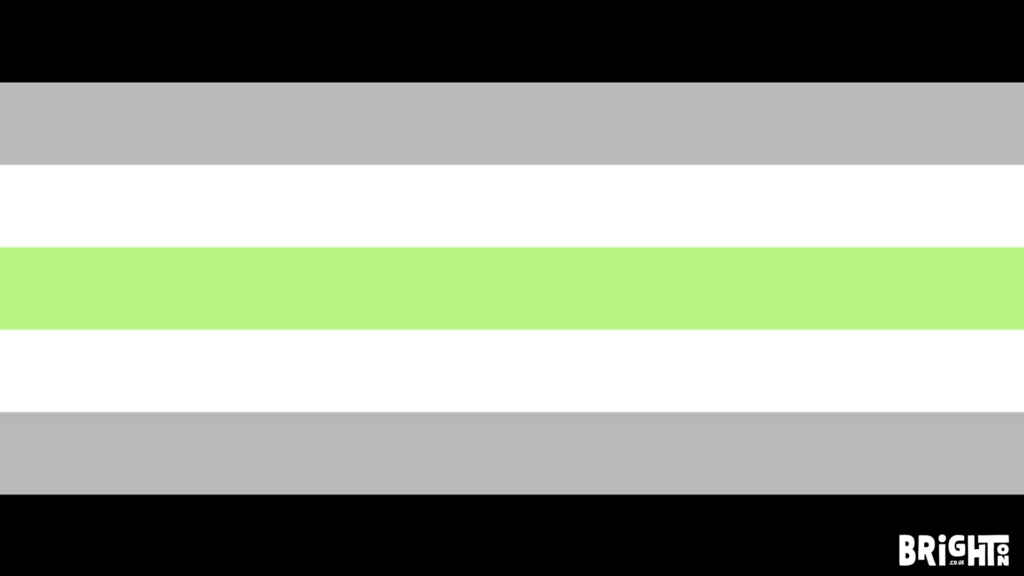
Introduced by Salem X in 2014, the Agender Pride Flag represents people who don’t identify with any gender.
What do the colours of the Agender Pride Flag represent?
Black, white and grey = the absence of gender
Green was chosen because it sits outside colours traditionally associated with masculinity and femininity
Genderqueer Pride Flag

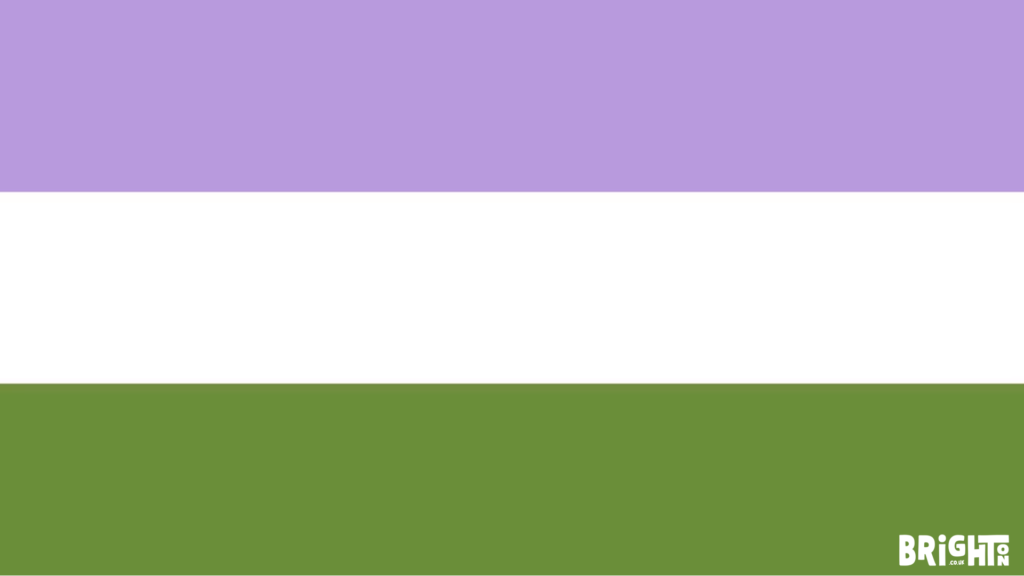
Created by Marilyn Roxie in 2011, the Genderqueer Pride Flag represents people whose gender exists outside traditional binary ideas of male and female.
What do the colours of the Genderqueer Pride Flag represent?
Lavender = a mix of blue and pink, represents androgyny
White = people who are Agender
Green = identities that are defined outside of the binary gender expectations
Genderfluid Pride Flag

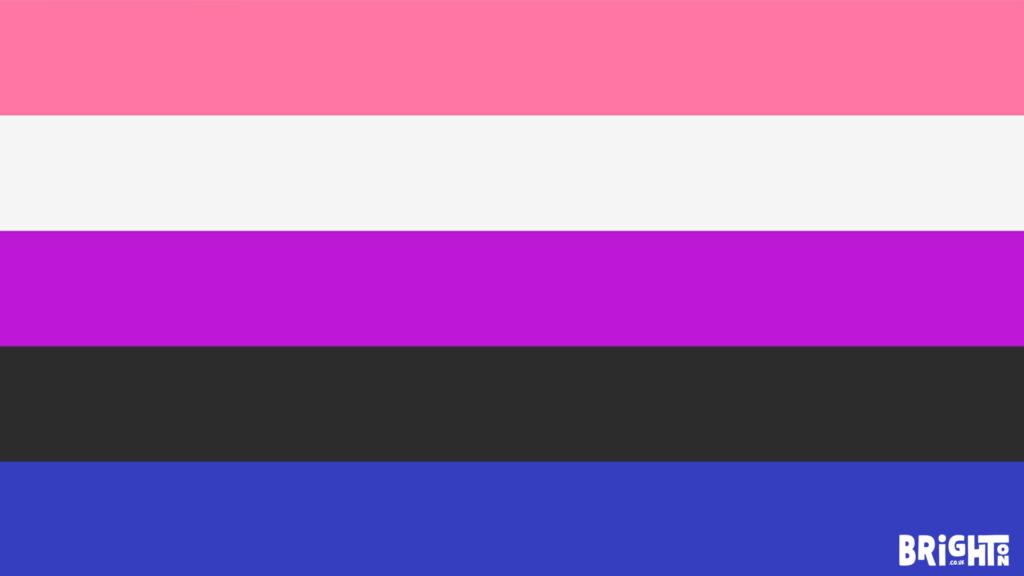
Created by JJ Poole in 2012, the Genderfluid Pride Flag represents people whose gender identity can change over time. Its pink, white, purple, black and blue stripes reflect femininity, all genders, a combination of masculinity and femininity, the absence of gender and masculinity.
What do the colours of the Genderfluid Pride Flag represent?
Pink = femininity or expression of feminine traits
Blue = masculinity or identifying as or expressing masculine traits.
Purple = a blend of masculine and feminine traits
Black = non-binary and agender identities
White = fluid nature of gender
Genderfluidity looks different for everyone, so the flag brings several experiences together rather than suggesting one fixed way to identify.
Demiboy Pride Flag

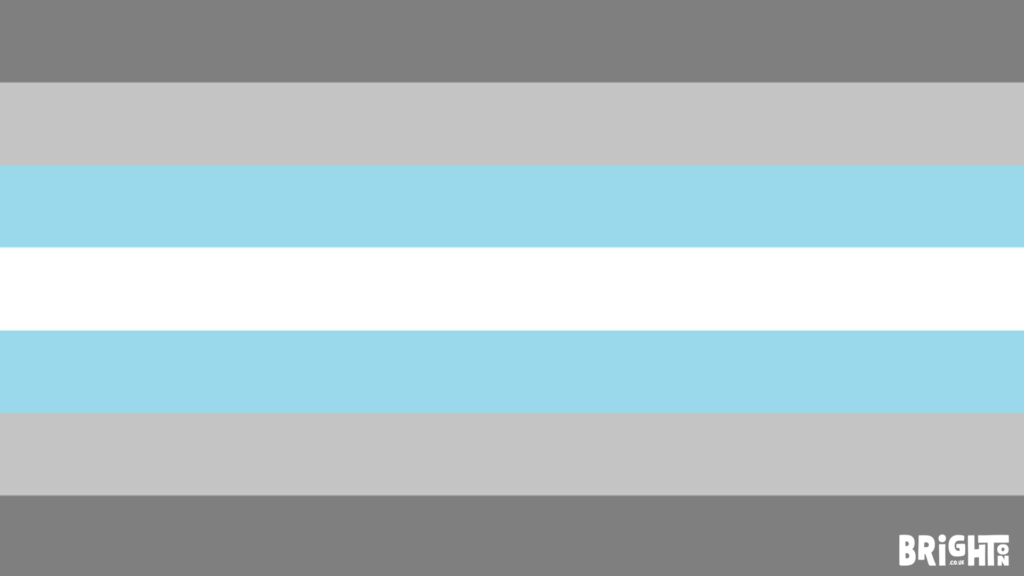
The Demiboy Pride Flag represents those in the community who identify partly, but not entirely, as a man, boy, or otherwise masculine. Designed in 2015 by Tumblr user, its grey, white and blue stripes reflect different experiences of gender while giving greater visibility to an identity that often sits outside traditional expectations.
Demigirl Pride Flag

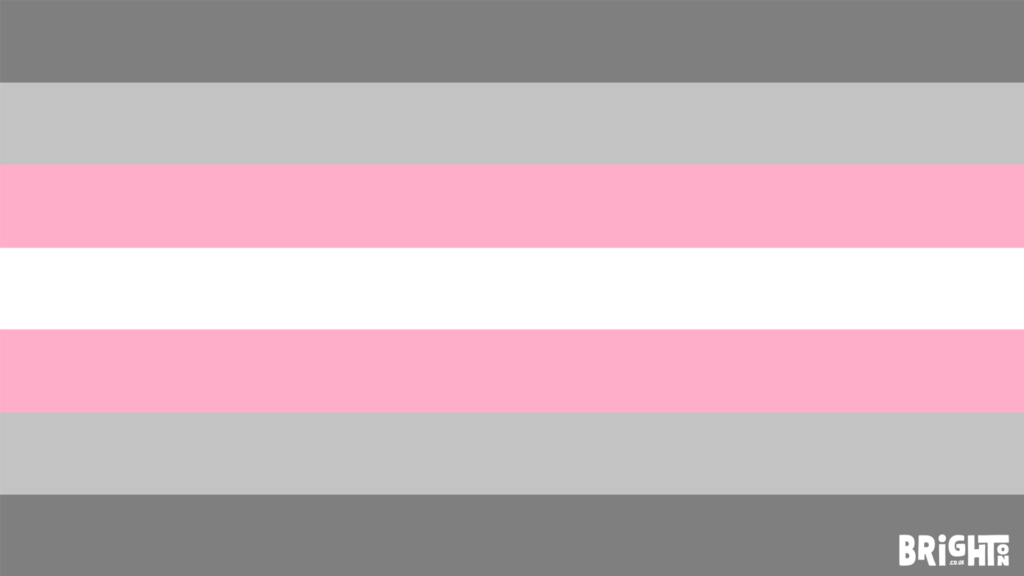
The Demigirl Pride Flag represents people who identify partly, but not entirely, as female. Its pink, white and grey stripes symbolise different experiences of femininity and gender.
Sexual orientation pride flags
Love, attraction and identity aren’t one-size-fits-all, and neither are these flags. Each one represents a different sexual orientation, giving people a way to celebrate who they are, feel seen and connect with others who share similar experiences.


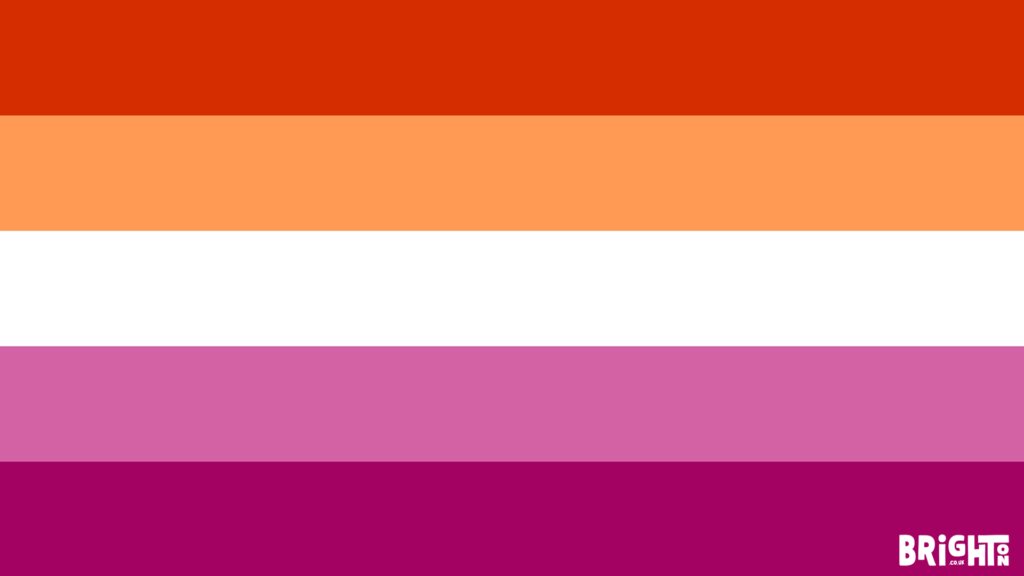
Lesbian Pride Flag

The orange, white and pink Lesbian Pride Flag is the version you’ll most commonly see today. Its stripes celebrate gender non-conformity, independence, community, relationships with womanhood, serenity and peace, love and femininity.
What do the colours of the Lesbian Flag represent?
Dark orange = gender nonconformity
Light orange = independence
White = unique connections to womanhood and the fluidity of femininity
Pink = community, love, compassion and sex
Dark pink = femininity
There have been several lesbian flags over the years, and not every lesbian connects with the same design, but this version has become widely recognised across the community.
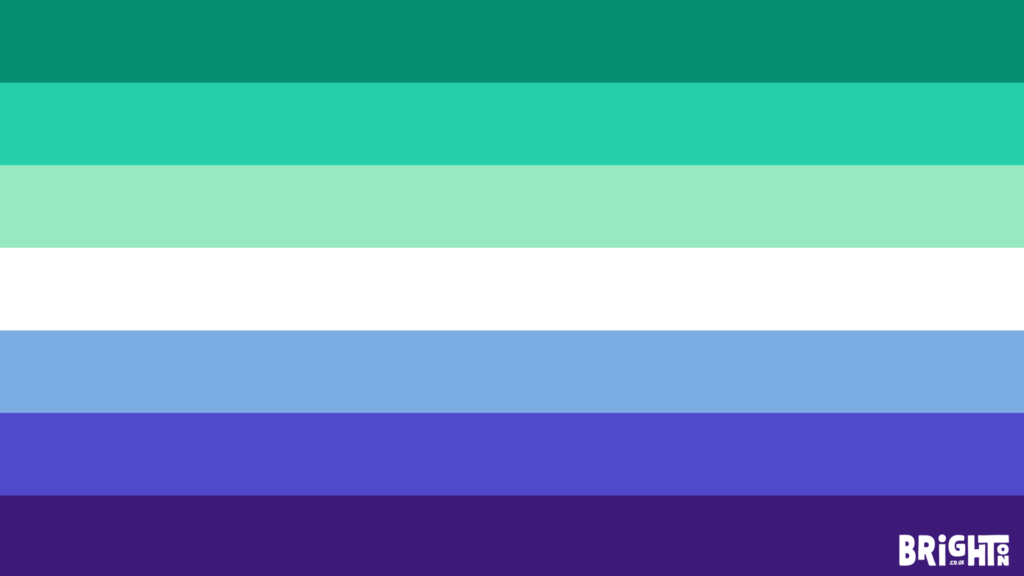
Gay Men's Pride Flag
(MLM Pride Flag)

The Gay Men’s flag consists of five colours (sometimes seven) was designed by Tumblr user @gayflagblog in 2019.
What do the colours of the Gay Men’s Pride Flag represent?
Green = community
Turquoise = healing
Teal = joy
White = gender non-conforming (GNC), transgender, and non-binary (NB) individuals
Light blue = pure love
Purple = fortitude
Indigo = diversity
The creator of the Gay Men’s Pride Flag, @gayflagblog says:
“ This flag is inclusive of all gay men. This includes Aro, questioning/unsure, NB, ace, & gay men that are gender non-conforming, be you masc, fem, or androgynous in any way! ”
Bisexual Pride Flag

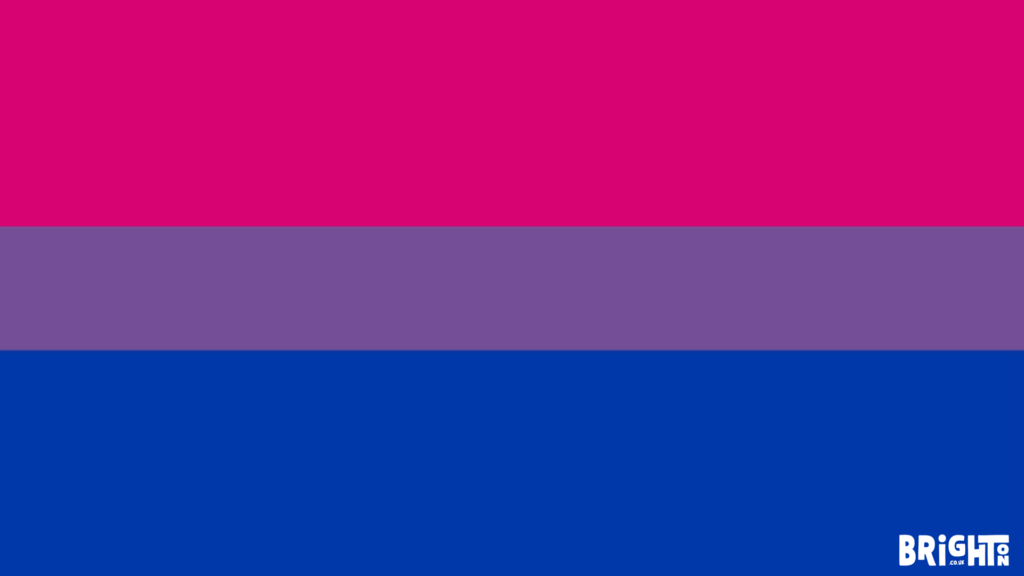
LGBTQ+ activist Michael Page created the Bisexual Pride Flag in 1998 to give bisexual people a more recognisable symbol of their own. You don’t need to experience attraction equally, or in exactly the same way, to identify as bisexual.
What do the colours of the Bisexual Flag represent?
Pink = attraction to the same gender
Blue = attraction to other genders
Purple overlap reflects attraction across genders
Pansexual Pride Flag

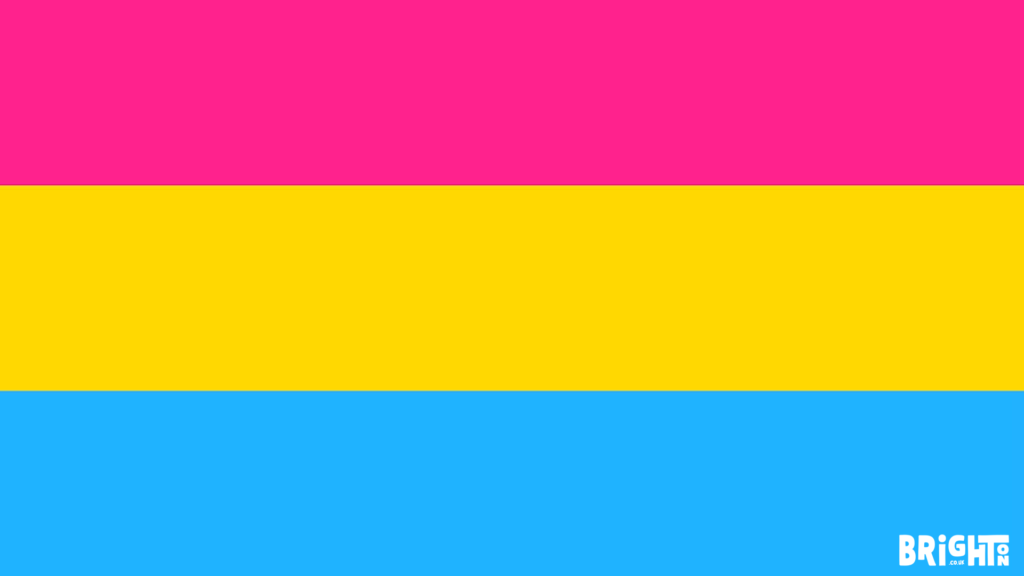
The Pansexual Pride Flag appeared online in 2010 and represents people who can experience attraction regardless of gender. Its pink, yellow and blue stripes are commonly understood to represent attraction to women, people outside the gender binary and men. Pansexuality doesn’t mean being attracted to everyone; it simply means gender isn’t necessarily a deciding factor in who someone can be attracted to.
Ace (Asexual) Pride Flag

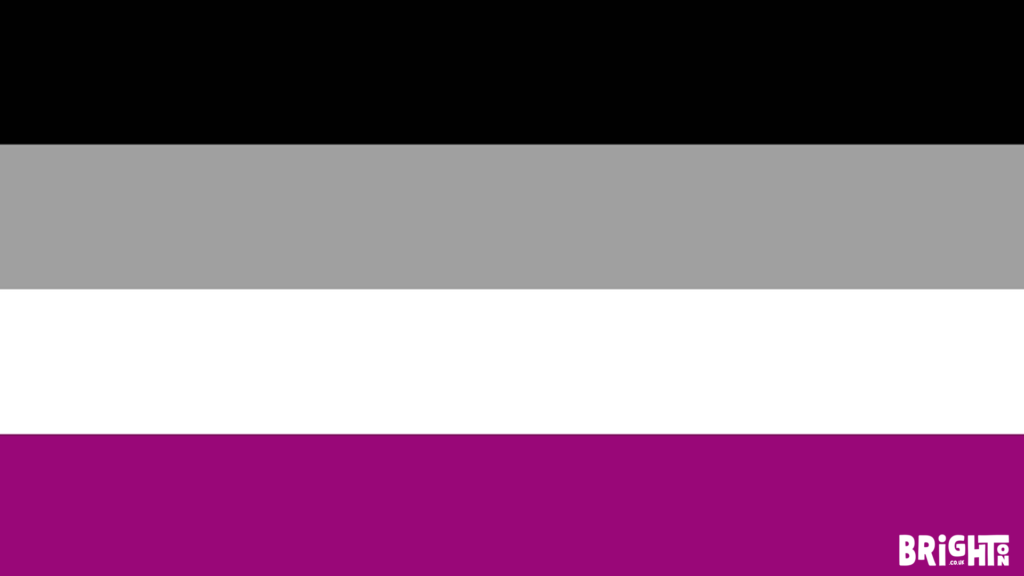
The Asexual flag was created in 2010 following an online community vote to raise awareness for Asexual members in the LGBTQIA+ community. The Asexual Pride Flag represents people who experience little or no sexual attraction. Black represents asexuality, grey reflects grey-asexuality and demisexuality, white represents sexuality and allies, and purple stands for community. Asexuality covers a broad spectrum, and romantic attraction can be completely separate from sexual attraction.
Brighton's newsletter, straight to your inboxe
Community, culture & identity pride flags
Some Pride flags celebrate more than identity or orientation alone. These pride flags celebrate some of the cultures, communities and subcultures that have become an important part of LGBTQIA+ history and life, while recognising the many different stories, backgrounds and voices that make our community what it is today.


Queer People of Colour Pride Flag

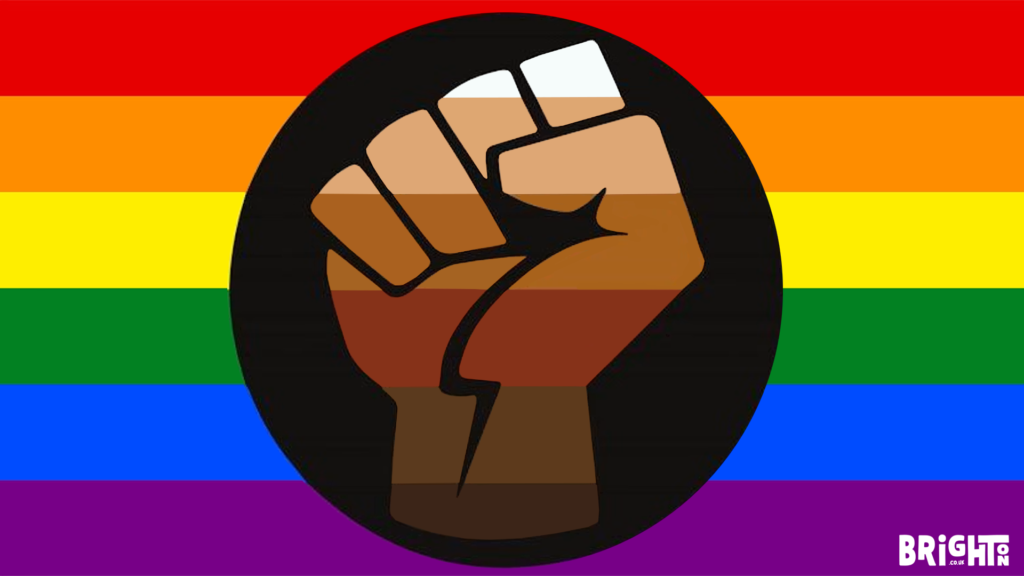
The Queer People of Colour Pride Flag centres LGBTQIA+ people from Black, Asian and other minority ethnic communities. Its raised fist represents solidarity, resistance and collective action, set against rainbow stripes associated with wider queer pride. The flag draws attention to the overlapping experiences of racism and anti-LGBTQIA+ discrimination, while celebrating identity, community and the people continuing to push for change.
Two-spirit Pride Flag

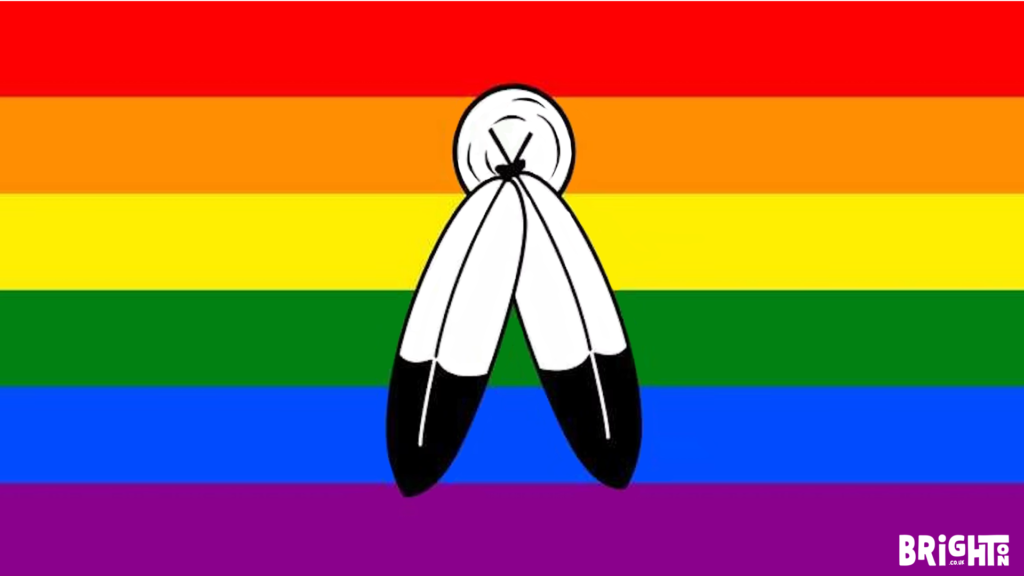
Two-Spirit is a term used by some Indigenous people in North America whose cultural identity may include spiritual, gender and community roles. It isn’t a general alternative to LGBTQIA+ labels and should only be used by Indigenous people who identify with it. Two-Spirit flags vary between communities, but designs often combine rainbow imagery with culturally significant symbols to represent both Indigenous and queer identity.
Bear Brotherhood Flag

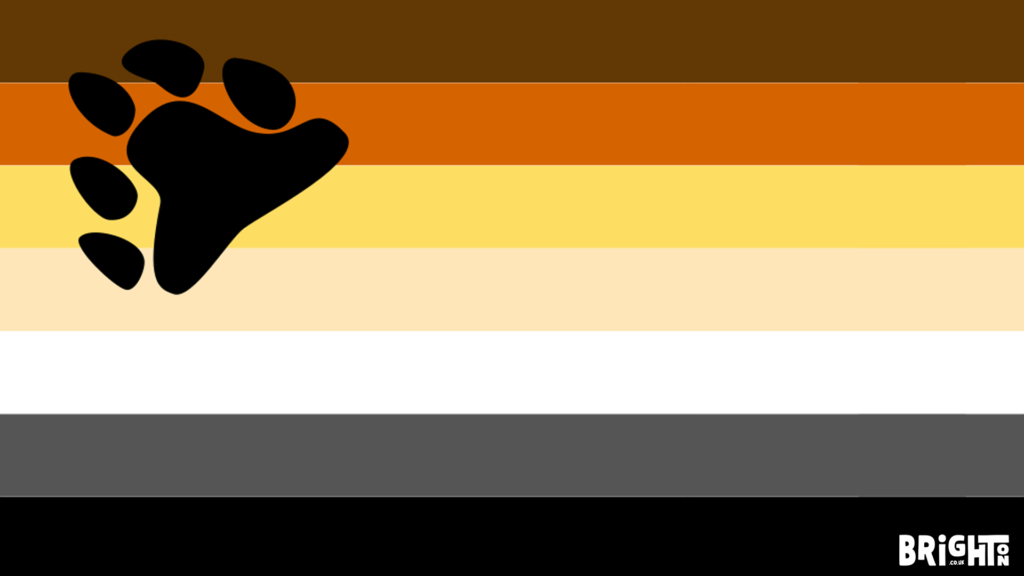
Created by psychology student Craig Byrnes in 1995, the International Bear Brotherhood Flag celebrates the bear community subculture within the LGBTQIA+ community. The seven stripes were inspired by the natural fur colours of bears found in the wild, representing the diversity of the community rather than human skin or hair colour. The black paw print in the corner has become an instantly recognisable symbol of bear identity, pride and belonging.
Discover more of Brighton's queer scene
You’ve officially levelled up your Pride flag knowledge.
The next time you’re wandering around The Lanes in Brighton, visiting for Brighton Pride, spotting a pride flag in a shop window or a pin on someone’s clothing, you’ll know the story behind it and what each flag represents.
If you’re ready to keep exploring, our LGBTQIA+ hub is packed with guides celebrating Brighton & Hove’s queer community, history and queer owned businesses. Head over to what’s on to discover upcoming LGBTQIA+ events, from Brighton & Hove Pride, Trans Pride celebrations and drag nights to community meet-ups and everything in between.
More from Arts & Culture
Fancy another Brighton read? Our book lover’s guide to Brighton shares some of the city’s best literary spots, independent bookshops and places worth knowing about.